Getting to Know Pandas: Uncovering the Wonders of the Giant Panda’s Life
Pandas are among the world’s most popular animals. Their plump bodies, black-and-white fur, and slow, lumbering movements have captivated countless people. This article will give you a comprehensive understanding of pandas, covering everything from their physical characteristics and dietary habits to their reproduction and current conservation status. By the time you finish reading it, you’ll know more about these magical animals than most people do.
I. What Kind of Animal Is the Panda?
The full Chinese name for the panda is “giant panda,” and its scientific name is Ailuropoda melanoleuca. It belongs to the bear family and is a close relative of bears; it is not a member of the cat family.

Many people think that pandas and red pandas are the same animal. In fact, they are completely different. Red pandas are cat-sized with reddish-brown fur and belong to their own family, the Ailuridae. The giant panda, which resembles a bear and has black-and-white fur, is what we commonly refer to as the panda.
Pandas live exclusively in the high-altitude bamboo forests of three Chinese provinces: Sichuan, Shaanxi, and Gansu. Sichuan has the largest population of wild pandas, accounting for more than 70% of the national total. Chengdu is the largest city closest to the wild panda habitat and serves as the global center for panda conservation and research.
II. Physical Characteristics of Pandas
Body Size and Weight
Adult pandas are approximately 1.2 to 1.9 meters long, with a shoulder height of about 60 to 90 centimeters. Males weigh about 85 to 135 kilograms, while females weigh about 70 to 100 kilograms.
Although they appear plump, they are actually quite muscular and can run at speeds of up to 40 kilometers per hour. Many people perceive pandas as slow-moving and non-aggressive. In reality, pandas are wild animals with great strength, and their bite force ranks among the highest among bears.
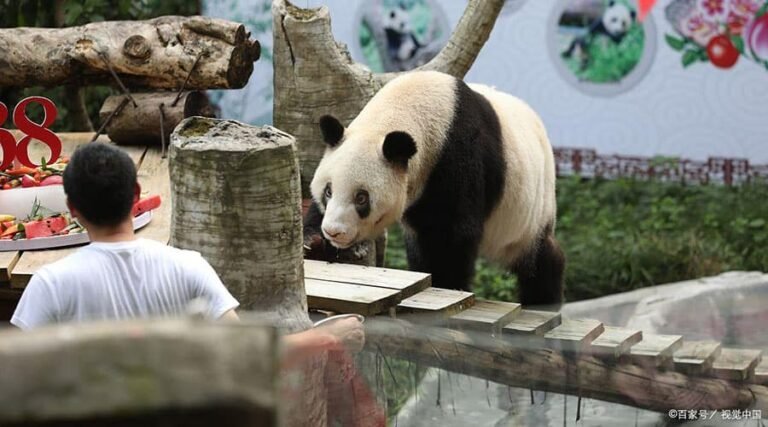
Captive pandas appear docile because they have been in contact with humans since childhood, but wild pandas are dangerous and should not be approached.
The Secret Behind Their Black-and-White Coat
The panda’s black-and-white coat isn’t just for looks—it serves a practical purpose. The black ears and eye rings act as warning signals in snowy terrain, making the panda more visible to both its own kind and predators. The white body provides camouflage against the snow, while the black limbs blend into the shadows. In the mountainous forest environment, where snow, ice, and rocks intermingle, this coloration actually provides excellent camouflage.
The Unique Pseudothumb
The panda’s front paws feature a special structure called a pseudothumb. It is not a true finger but rather a small protrusion formed by the specialization of a wrist bone. This pseudothumb can interlock with the other five fingers, allowing the panda to grasp bamboo with great dexterity. This is a unique anatomical adaptation evolved specifically for eating bamboo and is not found in any other bear species.
Teeth and Digestive System
Pandas have 42 teeth, with molars that are wider and larger than those of other bear species, making them well-suited for grinding bamboo.
Their digestive system is actually structured like that of a carnivore: they have a short intestine and lack the bacteria necessary to digest plants. This means pandas are very inefficient at digesting bamboo, absorbing only about 17% of its nutrients. To obtain enough energy, they must eat large quantities of food.
III. The Panda’s Diet

They Eat Almost Exclusively Bamboo
Bamboo makes up 99% of a panda’s diet. They eat all parts of the bamboo plant, including leaves, stems, and shoots. Their preferences vary by season: in spring, they favor bamboo shoots; in summer, bamboo leaves; and in winter, they mainly eat bamboo stems.
An adult panda eats 12 to 38 kilograms of bamboo daily, which is equivalent to 20% to 40% of its body weight. They spend 10 to 16 hours a day eating, and most of the remaining time is spent sleeping or resting.
Many people believe that pandas eat only bamboo and no meat at all. In fact, pandas occasionally eat small animals, bird eggs, or carrion. Captive pandas also eat specially formulated cornbread, apples, and carrots as nutritional supplements. However, bamboo remains their staple food.
Why Do Pandas Choose to Eat Bamboo?
This is actually a very interesting question. Pandas’ ancestors were originally carnivores and only began to switch to a bamboo-based diet about 2 million years ago.
Scientists believe that environmental changes at that time led to a decline in prey populations, whereas bamboo was widely distributed, available year-round, and faced little competition. Pandas chose bamboo to secure a stable energy source during times of food scarcity.
Although bamboo is difficult to digest, it is abundant enough that pandas can sustain themselves by consuming large quantities of it.
Water Consumption Habits
Pandas need to drink large amounts of water because bamboo does not provide enough moisture. They usually drink from streams or rivers, sometimes drinking a lot before lying down by the water to rest. In captivity, keepers ensure that pandas have access to clean drinking water at all times.
IV. Behavioral Habits of Pandas
Solitary Lifestyle
Wild pandas are solitary animals, with each individual having its own territory. They mark the boundaries of their territory with scent and generally do not actively enter the territories of other pandas. Except during mating season and when a female panda is caring for her cubs, pandas rarely interact with other pandas.
Many people believe that pandas are social animals because they often see multiple pandas together at conservation centers. However, this is a special circumstance unique to captivity; wild pandas are essentially solitary.
Activity Patterns
Pandas do not follow a strict diurnal or nocturnal schedule. They are active both during the day and at night, staying active for 2 to 4 hours at a time, followed by 2 to 4 hours of sleep. They are most active in the early morning and late afternoon, and usually rest around noon. This is why it’s best to visit panda reserves early in the day. Pandas are active in the morning, while many are sleeping in the afternoon.
Tree Climbing and Swimming
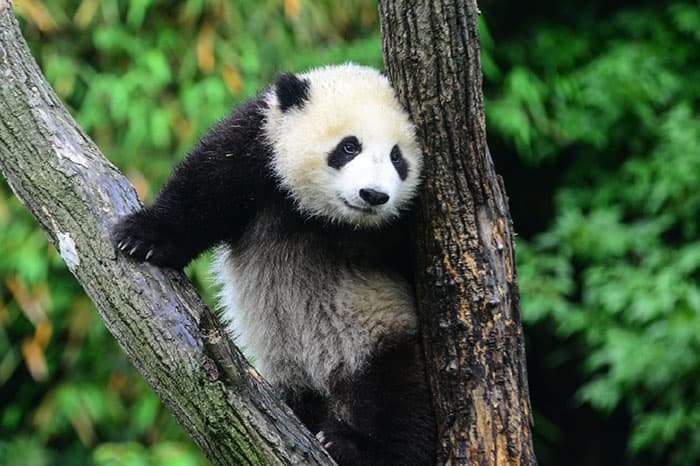
Pandas are skilled at climbing trees, especially young pandas. They climb trees to escape danger, bask in the sun, or rest. Adult pandas are heavier and climb less frequently, but they can still climb quite high when necessary.
Pandas can also swim; during hot summers, they like to soak in water to cool off.
Communication
Pandas primarily communicate through scent and sound. They use secretions from their anal glands to leave scent marks on tree trunks and rocks, conveying information such as their identity, gender, and reproductive status.
In terms of sound, pandas produce a variety of calls, including bleating, barking, and bird-like chirps. Female pandas and their cubs share a special set of communication calls.
V. Panda Reproduction and Cubs
Reproductive Challenges
Pandas have a very low reproduction rate, which is one of the key reasons they were once endangered.
Female pandas have only one estrus cycle per year, lasting 2 to 7 days, with a fertile window of just 1 to 2 days. If this window is missed, they must wait another year. Male pandas will fight each other to compete for mates.
Many people assume that breeding pandas in captivity is easy. In reality, captive pandas also face breeding challenges; some male pandas lack mating experience and require behavioral guidance through methods such as “panda porn.”
Artificial insemination techniques are now relatively well-established, significantly improving breeding success rates.
Gestation and Cubs
The gestation period for pandas ranges from 95 to 160 days, with significant variation. This is because pandas experience delayed implantation; the fertilized egg does not immediately implant in the uterus but floats there for a period of time.
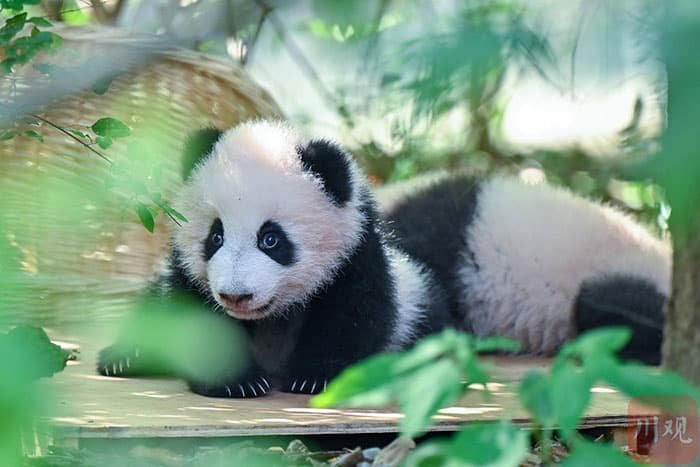
Panda cubs are extremely fragile at birth, weighing only about 100 grams—just 1/900th of their mother’s weight. They are entirely pink, with only sparse white fur; their eyes are closed, and they are completely dependent on their mother.
Many people believe that panda cubs are born with black-and-white fur. In fact, newborn panda cubs are pink; black patches begin to appear after about a week, and it takes about a month for them to develop their characteristic black-and-white appearance.
Cub Development
After birth, the mother panda cares for her cub with great attention. She holds the cub almost constantly, using her body heat to keep it warm and licking it to stimulate bowel movements.
The cub opens its eyes at about 40 days, begins crawling at 3 months, and starts learning to eat bamboo at 6 months. By about one year of age, cubs can weigh 30 to 40 kilograms and begin to move about independently. In the wild, panda cubs typically stay with their mothers until they are 1.5 to 2 years old, after which they leave to live on their own. In captivity, cubs are generally separated from their mothers after six months and cared for by keepers.
VI. Current Status of Giant Panda Conservation
From Endangered to Vulnerable
In 2016, the International Union for Conservation of Nature (IUCN) downgraded the conservation status of the giant panda from “Endangered” to “Vulnerable.” In 2021, China also reclassified the giant panda from “Endangered” to “Vulnerable” on its list of Class I nationally protected animals. This marks a significant achievement in conservation efforts.
According to the Fourth National Giant Panda Survey conducted in 2014, the wild panda population stood at approximately 1,864. Combined with more than 600 pandas in captivity, the global panda population exceeds 2,400.
Many people believe that giant pandas are no longer in danger and that conservation efforts can be relaxed. In reality, pandas still face threats such as habitat fragmentation, climate change, and bamboo flowering. While the downgrade in conservation status is good news, it does not mean that conservation efforts can cease.
Conservation Measures
China has established 67 giant panda nature reserves, covering approximately 70% of the wild panda habitat. At the same time, ecological projects such as the Natural Forest Conservation Program and the Grain-for-Green Program have been implemented to restore panda habitats.
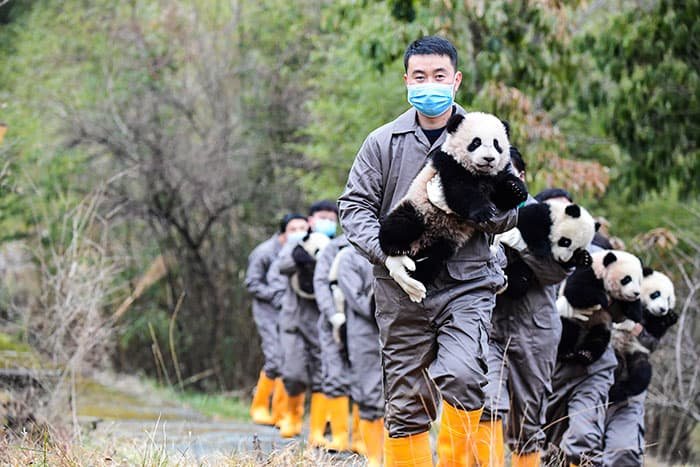
Captive breeding and reintroduction programs are also ongoing, releasing captive-bred pandas into the wild to replenish the population. The Chengdu Research Base of Giant Panda Breeding is one of the world’s most important panda conservation institutions. It is a global leader in panda breeding, disease prevention and control, and public education.
Panda Diplomacy
Since the 1950s, pandas have traveled to various countries as ambassadors of friendship for China. After 1982, China stopped giving pandas as gifts and switched to a long-term loan program. Foreign zoos must pay an annual rental fee of approximately $1 million, and cubs must be returned to China once they reach the age of 4. All of this rental income is used for panda conservation projects. Currently, zoos in about 20 countries around the world house pandas, all of which are on loan from China.
VII. Fun and Little-Known Facts About Pandas
- Panda poop doesn’t smell bad: Since they mainly eat bamboo, panda feces have a fresh, bamboo-like scent and can even be used to make paper.
- Pandas defecate more than 40 times a day: Because they eat a lot and have inefficient digestion, they need to defecate frequently.
- A panda’s dark eye patches are unique: The shape and size of each panda’s dark eye patches differ, much like human fingerprints, and can be used to identify individual pandas.
- Panda cubs are born without dark eye patches: They begin to appear after about a week.
- Pandas can walk upright: Although they cannot walk far, pandas occasionally stand and walk on their hind legs, usually to observe their surroundings.
- Pandas have coarse fur: Their outer coat is coarse and stiff, while the undercoat is soft and downy, providing excellent insulation that allows them to withstand temperatures in the low teens below zero.
- Pandas have six “fingers”: Five true fingers plus a pseudo-thumb, for a total of six “fingers.”
- The panda was originally called “mao xiong” in Chinese. Due to changes in reading order in modern times, the name gradually evolved into “panda.”
VIII. Where to See Pandas
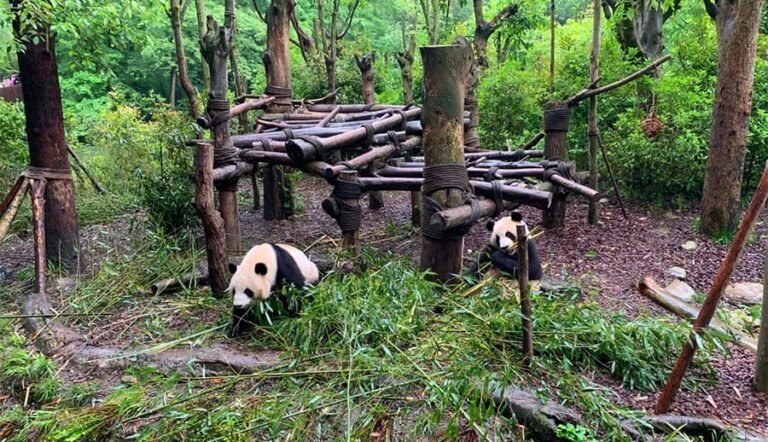
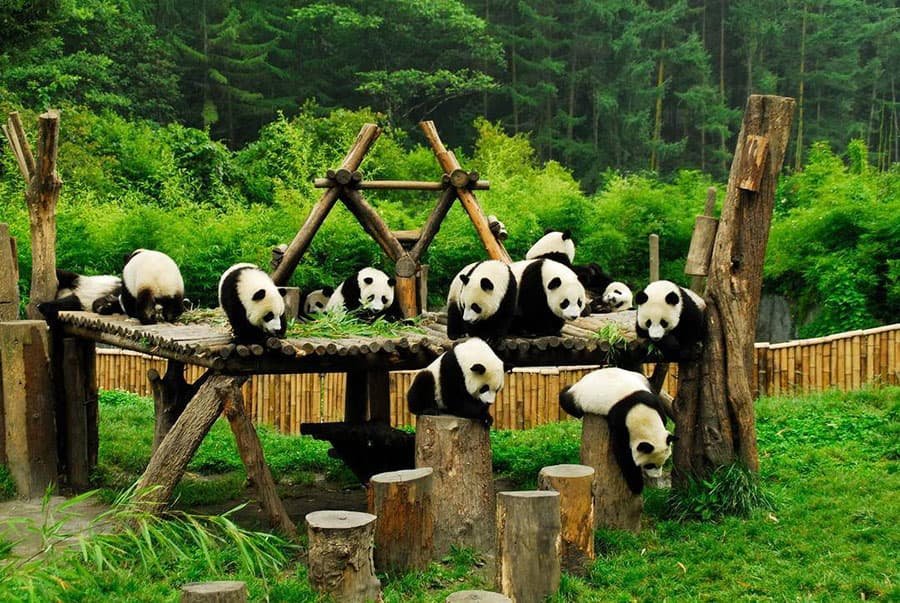
If you want to see pandas in person, Chengdu is the best destination. The Chengdu Research Base of Giant Panda Breeding is the world’s largest facility for the captive breeding of pandas, home to more than 260 pandas. You can watch them up close as they eat bamboo, climb trees, and play.

In addition to the center in downtown Chengdu, you can also see pandas at Dujiangyan Panda Valley, the Wolong Shenshuping Center, and the Ya’an Bifengxia Center. Each of these locations has its own unique charm, offering a more natural environment and fewer visitors.
If you’re planning a trip to Chengdu to see pandas, we recommend setting aside half a day to a full day. Pandas are most active between 7:30 a.m. and 10:00 a.m., making this the best time for a visit.
For a hassle-free itinerary, contact Panda Chengdu Tours. We specialize in inbound tourism services for Chengdu and Sichuan, are familiar with all the panda centers, and can help you arrange tickets, transportation, and English-speaking guides.
Panda Chengdu Tours can also customize in-depth travel itineraries for Chengdu and Sichuan based on your schedule.
IX. About Chengdu
Chengdu is a major city in southwest China and the home of the giant panda. With a history spanning over 2,000 years, the city boasts a rich cultural heritage. Chengdu’s cuisine is world-renowned, and hot pot, Mapo tofu, and Kung Pao chicken are all must-try local dishes.

Life here moves at a leisurely pace, and parks are filled with people sipping tea and chatting. Kuanzhai Alley and Jinli Ancient Street preserve traditional architecture and are perfect for strolling and taking photos.
The people of Chengdu are friendly and welcoming, and the city offers excellent amenities, making it ideal for foreign tourists traveling independently. While you’re here to see the pandas, why not stay a few extra days to experience the city’s unique charm?
X. FAQ: Frequently Asked Questions
Q: Are pandas bears or cats?
A: Pandas belong to the bear family and are close relatives of bears. Although their name includes the word “cat,” they are not related to cats.
Q: How many wild pandas are there?
A: According to the fourth national survey conducted in 2014, there are approximately 1,864 wild pandas. Combined with more than 600 in captivity, the global total exceeds 2,400.
Q: Do pandas really eat only bamboo?
A: Bamboo makes up 99% of a panda’s diet, but they occasionally eat small animals, bird eggs, or carrion. Pandas in captivity also eat cornbread, apples, and carrots as supplements.
Q: Why are pandas so lazy?
A: Pandas aren’t lazy; rather, because bamboo is low in nutrients and difficult to digest, they must conserve energy by reducing their activity. They spend 10 to 16 hours a day eating, and the rest of the time they mainly rest.
Q: Do pandas attack people?
A: Wild pandas are aggressive and should not be approached. Although captive pandas are docile, they are still wild animals, so visitors must follow the rules and must not climb over fences or attempt to touch them.
Q: What is the purpose of a panda’s black eye patches?
A: The black eye patches may serve several functions: they increase facial contrast against snowy backgrounds, acting as a warning; they reduce glare around the eyes; Each panda’s dark eye patches are unique and can be used for individual identification.
Q: Why are panda cubs so small?
A: Panda cubs weigh about 100 grams at birth, which is only 1/900th of their mother’s weight. This is because pandas experience delayed implantation, resulting in a short embryonic development period, and the cubs continue to develop outside the womb.
Q: Where can I see the most pandas?
A: The Chengdu Research Base of Giant Panda Breeding is the world’s largest facility for the captive breeding of pandas, with over 150 pandas. If you’re planning a panda tour in Chengdu, contact Panda Chengdu Tours for expert advice and itinerary planning.
Q: How long do pandas live?
A: Wild pandas live for about 20 years, while those in captivity can live for over 30 years due to better medical care. The oldest recorded panda lived to be 38 years old.
Q: Why are pandas endangered?
A: The main reasons are habitat destruction and fragmentation, which lead to isolation of panda populations and hinder genetic exchange. Combined with low reproduction rates, this results in slow population recovery. Thanks to years of conservation efforts, their numbers have rebounded, and their conservation status has been downgraded from “Endangered” to “Vulnerable.”
XI. Conclusion
The panda is a unique and fascinating animal. Having transitioned from carnivorous ancestors to a bamboo-based diet, it has evolved a pseudo-thumb and broad molars. Despite its reproductive challenges and fragile cubs, its population has gradually recovered with human assistance. It serves not only as a cultural symbol of China but also as an emblem of global biodiversity conservation. Learning about pandas is not just about understanding an animal; it’s about understanding how humans and nature can coexist.
If you want to see these adorable creatures with your own eyes, Chengdu is the best place to go. To plan your panda experience in Chengdu, feel free to contact Panda Chengdu Tours.
We’ll provide professional service to make your panda tour even more memorable.