
When Are Pandas Most Active in Chengdu? A Guide
Giant panda activity times
|
Time Period |
Giant Panda Status |
Is it worth seeing? |
|---|---|---|
|
7:30–10:00 (peak season) / 8:00–10:00 (winter) |
Eating breakfast, climbing trees, roughhousing, rolling around |
Yes, the golden window |
|
10:00–14:00 |
Focus on sleeping |
Not really suitable—most people are asleep |
|
14:00–15:30 |
Possible brief activities, extra meals |
Now and then, I try my luck |
|
3:30 p.m.–Park closes |
Keep sleeping or move slowly |
Not really suitable |
To sum it up: Giant pandas are most active from 7:30 to 10:00 in the morning. This is when they eat breakfast, climb trees, and play. After 10:00, most of them start sleeping. However, two factors can change this pattern: temperature and season.
A Day in the Life of a Giant Panda: What Do They Actually Do?
The daily rhythm of giant pandas differs completely from humans’. They spend about 12 to 16 hours a day eating, and they spend almost all the rest of the time sleeping and resting.
Why is this? Because bamboo is very low in nutrients. Giant pandas must eat a great deal of bamboo to obtain enough energy. Digesting bamboo takes a long time, so they need plenty of rest to conserve their energy.
Giant pandas are crepuscular animals—meaning they are most active in the early morning and late afternoon. At the Chengdu Panda Base, this “morning activity period” is condensed into the first two or three hours after the park opens. The early morning is also the coolest time of day for pandas. They make the most of this time to eat, then return indoors or under the shade of trees to rest.
Feeding Time: The Key to Activity Levels
Morning feeding at the Chengdu Panda Base begins around 7:30 to 8:00 a.m. This is the pandas’ most important meal of the day.

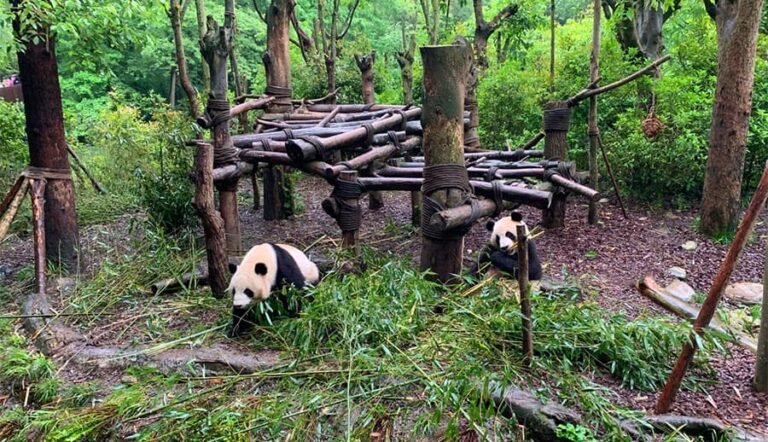
Keepers feed them fresh bamboo and concentrated feed (such as steamed buns and apples) in the early morning. The pandas sit and munch on bamboo, peel bamboo shoots, and sometimes even chase each other to抢 food. This is why 7:30 to 10:00 is the golden window. The pandas have just woken up, are hungry, and full of energy, and the bamboo is fresh. Whether they’re eating, climbing trees, or rolling around, everything they do is a delight to watch.
After 10:00, they’re full. Blood flows to their stomachs to aid digestion, and the pandas become drowsy. What you’ll see is the giant panda’s most iconic “lying flat” pose.
Why Do Giant Pandas Always Sleep?
For many people visiting a panda reserve for the first time, their biggest reaction is: “Why are they all sleeping?” This isn’t bad luck. It’s the giant panda’s normal state.
Giant pandas sleep about 12 to 16 hours a day. They aren’t lazy; they’re conserving energy. Bamboo provides very few calories, so giant pandas can’t stay active all day as carnivores do. They must regulate their energy expenditure.
So if you arrive at the panda reserve after 11:00 a.m., you’ll mostly see pandas sleeping. It’s not that they’re unwell—it’s simply their natural rhythm.
The Impact of Temperature: The 26°C Threshold
26°C serves as an invisible dividing line at the Chengdu Panda Base.
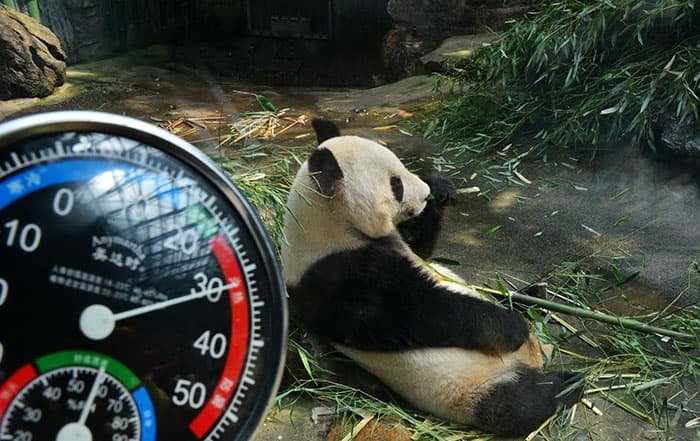
Giant pandas are extremely sensitive to heat. When the actual temperature measured in the shade, 1.5 meters above the ground, exceeds 26°C, pandas will typically return indoors on their own.
Note that this 26°C refers not to the weather forecast temperature, but to the actual temperature in the shade within the park. Because the pandas’ activity areas are rich in vegetation, the perceived temperature in the outdoor activity zones is usually lower than in the visitor areas.
This means:
In summer, you must get there early. Early summer mornings may see temperatures around 24°C, which is suitable for pandas to be active outdoors. However, by 10:00 or 11:00 a.m., temperatures will exceed 26°C. At that point, the pandas in the outdoor exhibits will be guided back indoors to the air-conditioned enclosures.
Cloudy days and days with light rain are actually the best times to view pandas. Many people assume that sunny days are best for seeing pandas. In reality, the opposite is true—on sunny afternoons, temperatures can easily exceed 26°C, so the pandas take shelter indoors in the air-conditioned enclosures. But on slightly cool, overcast days or days with light rain, temperatures may range from 20°C to 24°C, and the pandas will stay outdoors longer. Clad in their thick “waterproof fur coats,” a light drizzle is no bother to them.
Winter is one of the best seasons to visit. Giant pandas aren’t afraid of the cold. They can move about freely in the snow at temperatures ranging from minus 10°C to 20°C. Outdoor temperatures in Chengdu during winter typically range from 3°C to 10°C, which is very comfortable for pandas. They’ll be active outdoors, eating bamboo and climbing trees.
|
Temperature (measured in the shade) |
Panda Behavior |
Your Strategy |
|---|---|---|
|
Below 20°C |
Active outdoors, eating bamboo and climbing trees |
There are opportunities throughout the day |
|
20°C–25°C |
Outdoor activities; there may be a break in the afternoon |
Mornings preferred |
|
25°C–26°C |
Start cutting back on outdoor activities |
Get an early start—finish reviewing the key points before 10:00 a.m. |
|
Higher than 26°C |
Back inside the air-conditioned room |
Only during the 1–1.5-hour window after the park opens |
The Best Time of Day
7:30–10:00 is the prime time to visit the Chengdu Panda Base. This is the recommendation given by most travel guides, and it’s also the most reliable rule of thumb based on practical experience.

But there’s one detail to keep in mind:
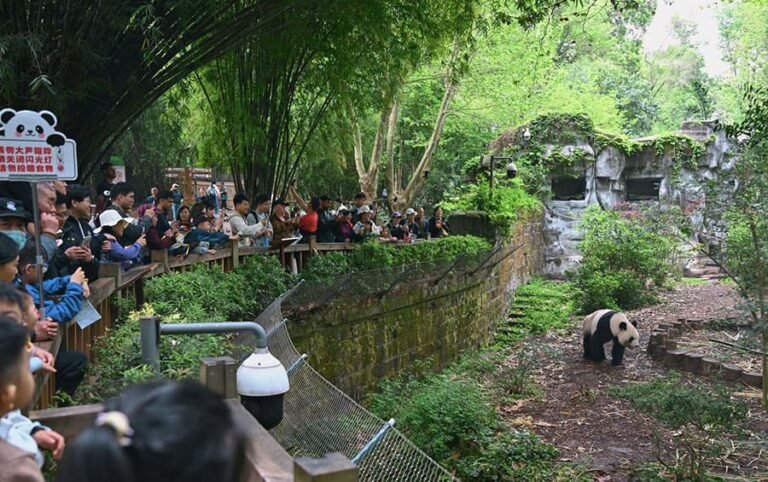
If you arrive at the South Gate at 7:30, there may already be a long line. By the time you actually reach the Panda Villa, it might already be past 8:00. The most efficient approach is to book tickets for the first admission slot in advance and arrive at the entrance 15 to 20 minutes early to line up. Once the park opens, head straight for your first destination—Hua Hua, the cubs, or your favorite panda villa.
There’s a second-best time slot between 2:00 PM and 3:30 PM. After their afternoon nap, some pandas will briefly get up and move around—eating a few bites of bamboo or changing spots. There are far fewer visitors during this time. If you’re not looking to see the pandas running and jumping, but just want to watch them quietly, entering the park after 2:00 PM is fine. However, if you’re coming specifically to see the cubs or Hua Hua, don’t count on the afternoon—you’ll most likely only see them sleeping.
Why do different visitors see pandas in completely different states?
At the same time and in the same panda reserve, some visitors see pandas climbing trees and playing, while others only see them sleeping. What’s the difference?
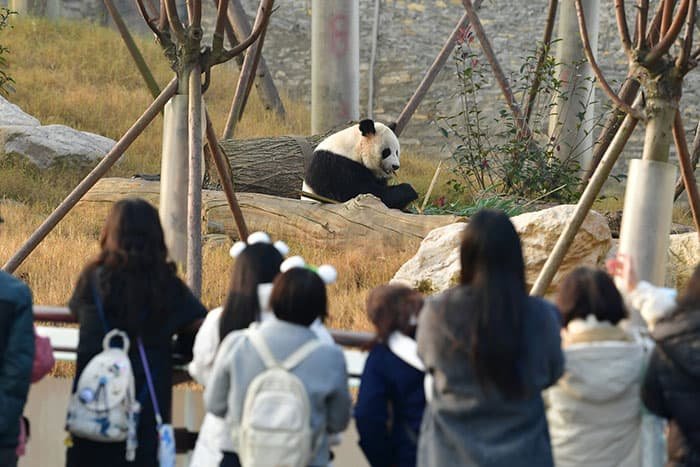
First, the time you arrive. Those who arrive at 7:30 a.m. and those who arrive at 10:30 a.m. experience two completely different worlds.
Second, which gate you use. The South Gate is the entrance to the old area, located near the juvenile panda villas and the maternity ward, and has the longest lines. The West Gate leads to the new area, which opened in 2022. It’s less crowded, the paths are smooth, and once inside, you can take a sightseeing bus to the old area. If you want to avoid the long lines at the South Gate, entering through the West Gate is a more relaxed option.
Third, the route you take. People who head straight for their target exhibit area as soon as the park opens will see completely different things than those who wander around the park at their leisure. If you enter at 7:30 a.m. and go straight to see Hua Hua, you’ll be able to see her before 8:00 a.m.; but if you take a stroll around other areas first and don’t reach Hua Hua until 10:00 a.m., she’ll already be asleep.
Visitor Tips
Book tickets in advance. The Chengdu Panda Base operates exclusively through online, real-name reservations; tickets are not sold on-site. Morning tickets are in high demand, so it’s recommended to book 14 days in advance. If you book through Panda Chengdu Tours, they’ll help you secure a spot in the morning session.
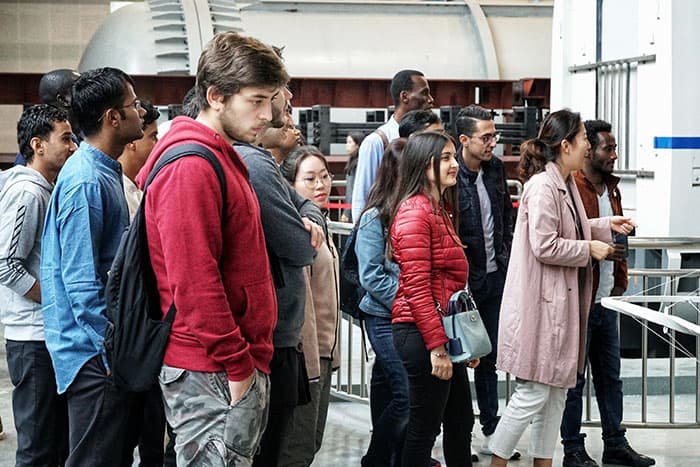
Arrive at the entrance between 7:00 and 7:15 a.m. If you’re entering through the South Gate, arrive 15 to 20 minutes early to wait in line. Once the park opens, head straight to your first destination. Whether you enter through the South Gate or the West Gate depends on your plans. If you want to see Hua Hua and the cubs, use the South Gate. If you want to avoid the crowds and enjoy a stroll, use the West Gate.
The sightseeing shuttle is worth the 30 yuan per person. The park is large and has many slopes; the shuttle allows you to hop on and off as you please, saving you a lot of energy. Be sure to bring drinking water and wear comfortable shoes. The walking distances in the park are long, and humidity is high in the bamboo groves. In the summer, bring mosquito repellent patches and a small fan.
Viewing Recommendations for Different Groups
|
Types of Visitors |
Recommended Time Slots |
Recommended Entry Points |
Important Reminder |
|---|---|---|---|
|
My First Time in Chengdu |
7:30–10:00 |
South Gate |
Book Early-Morning Tickets in Advance |
|
I want to see “Hua Hua” |
I’ll be there as soon as the park opens. |
South Gate |
Hua Hua has the day off on Monday; Villa No. 6 is closed. |
|
I want to see the cubs |
Before 9:00 |
South Gate |
There will be breastfeeding demonstrations this morning in the Sun Delivery Room and the Moon Delivery Room. |
|
Taking care of the elderly |
8:00–10:30 |
West Gate |
Take the sightseeing bus to cut down on walking |
|
Photography Enthusiasts |
7:30–9:00 |
South Gate |
In the soft morning light, pandas are most active. |
|
I want to avoid the crowds |
Winter Workdays |
West Gate |
Fewer people; pandas are active even in cold weather |
|
Only half a day |
7:30–10:30 |
South Gate |
Head straight to the core area—no detours |
Frequently Asked Questions
Q: Will I not see any pandas at all if I visit the Panda Base in the afternoon?
You won’t see absolutely none, but you should adjust your expectations. Between 2:00 p.m. and 3:30 p.m., some pandas may be briefly active. The rest of the time, they’re mostly sleeping. If you just want to “catch a glimpse of the pandas,” the afternoon is fine. But if you want to see them running, jumping, and playing, you’ll be disappointed in the afternoon.
Q: Do pandas come out on rainy days?
It depends on the intensity of the rain and the temperature. If it’s a drizzle and the temperature is below 26°C, pandas are usually outside. They aren’t bothered by light rain. If it’s heavy rain or a downpour, staff will bring the pandas back indoors. The rule of thumb is simple: check the day’s temperature. On days with light rain and temperatures below 25°C, the pandas are very likely to be outside.
Q: Will I not be able to see any pandas at all if I visit in the summer?
No. You can still see pandas in the summer, but the experience is different. When the park opens at 7:30, the pandas are outside eating breakfast. Around 9:30 to 10:00, once the temperature rises, they return indoors. You can watch them eat bamboo and enjoy the air conditioning through the glass in the indoor exhibition hall. The viewing experience in the indoor exhibits is actually quite good; it’s just that the lighting is a bit dim, so photos don’t turn out as well as they do outdoors.
Q: What’s the best time to arrive at the Panda Base?
Arrive at the entrance between 7:00 and 7:15 a.m. Once the park opens at 7:30, head straight to your target exhibit area. Finish touring the core area before 10:00 a.m. This is the most efficient itinerary.
Q: Are giant pandas playing when they’re up in the trees?
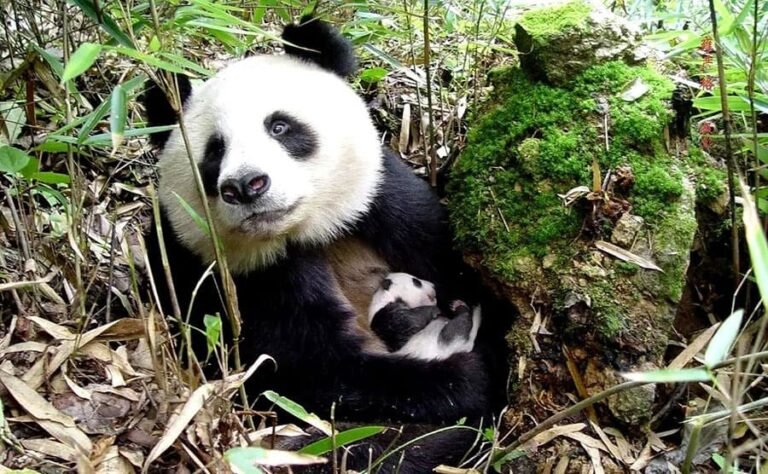
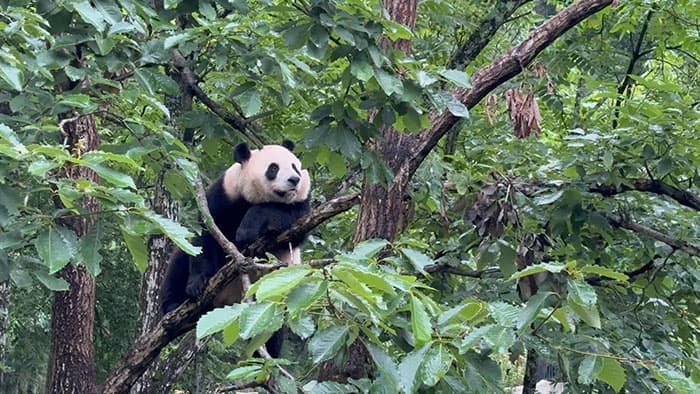
Sometimes they are. Young pandas love to climb trees; it’s how they practice their motor skills. But adult pandas climb trees mostly to find a cool spot to rest. If you see a panda hanging motionless from a tree, it’s probably sleeping.
Let Panda Chengdu Tours help you time your visit just right
When it comes to seeing pandas, timing is everything. The scene you’ll witness at 7:30 a.m. is completely different from what you’ll see at 10:30 a.m.
But in reality, you’ll face many practical questions: What will the weather be like the week you plan to visit? Will the temperature exceed 26°C that day? How long is the line at the South Gate? How should you leave your hotel to arrive at the entrance before 7:30 a.m.? Will Huahua be on display that day?
Panda Chengdu Tours specializes in inbound tourism services for Chengdu and Sichuan. We work with the Panda Base daily, so we know which exhibition areas are best to visit at what times, how to help you avoid long lines, and whether the day’s temperature and weather will affect the pandas’ outdoor activities.
Here’s how we can help:
- Ticket Reservations — We’ll secure morning tickets for you so you won’t arrive at the gate only to find they’re sold out.
- Itinerary Planning — Based on your dates and the weather, we’ll tell you what time to arrive, which gate to use, and what to see first.
- Transportation Arrangements — Private transportation from your hotel to the reserve, so you won’t have to squeeze onto the subway or wait for the bus.
- English-Speaking Guide — An expert in panda behavior who knows exactly when and where to find the most active pandas
- Combined Itineraries — We’ll link the Panda Base with other Sichuan attractions like Dujiangyan, Mount Qingcheng, and Leshan
Want to know the best times to visit the Panda Base during your stay? Contact Panda Chengdu Tours, tell us your dates, and we’ll help you figure it out.