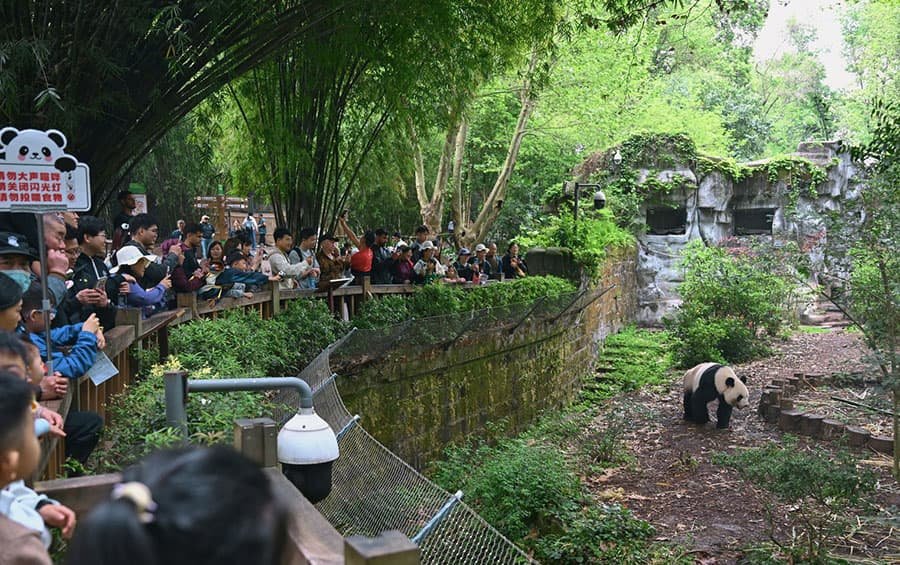
Best Time to Visit Chengdu Panda Base: Seasons & Hours
Key Decision Summary Table: See the Best Time at a Glance
|
Decision-Making Dimensions |
Recommended Choices |
Reason |
|---|---|---|
|
Best Time of Year |
March–May, September–November |
With the cool weather, pandas spend more time outdoors. |
|
Best Time |
7:30–10:00 (peak season) / 8:00–10:00 (winter) |
Pandas eat breakfast, climb trees, play around, and roll around |
|
Second-best time slot |
2:00–3:30 p.m. |
Some pandas were briefly active after their afternoon nap, and there were few visitors. |
|
Worst Time Slot |
10:30–1:30 p.m. |
The panda is sleeping; it’s rush hour |
|
Watching the Newborn Cubs |
Late August–October |
The birthing center is displaying the panda cubs born this year |
|
Watch “Hua Hua” |
Any season, but you must arrive early in the morning |
Hua Hua is at the Juvenile Giant Panda Villa, which is closed on Mondays |
|
Avoid the crowds |
Weekdays > Weekends > Holidays |
If the instantaneous visitor count reaches 36,000 during holidays, admission will be suspended |
|
Judgment on Rainy Days |
A slightly cool, overcast day or light rain is actually a good time |
Pandas are sensitive to heat and spend more time outdoors in cool weather |
Choosing a Season and Month: What You Can Actually See During Each Season
Spring (March–May): The Golden Window
Chengdu’s average spring temperature rises from about 13.5°C in March to about 22.6°C in May. This temperature range is very comfortable for pandas. They don’t need to retreat to air-conditioned rooms and are happy to spend more time outdoors.
March through April also offers a hidden highlight: the flowers in bloom at the reserve. Cherry blossoms, peach blossoms, and magnolias—paired with the black-and-white pandas—make for stunning photos.
However, spring comes with one variable: the May Day holiday. From May 1 to May 5, China observes a long holiday, and the reserve becomes extremely crowded. If you happen to visit during this period, you must secure tickets 14 days in advance and be prepared to wait in line.
Summer (June–August): A Strategic Approach Is Needed
Daily high temperatures in Chengdu often exceed 26°C in the summer, with average highs around 30°C in July and August. Giant pandas are extremely sensitive to heat. When the outdoor temperature exceeds 26°C, pandas typically return indoors on their own. This isn’t a special rule enforced by the panda reserve, but rather a conclusion based on years of breeding experience and scientific research.
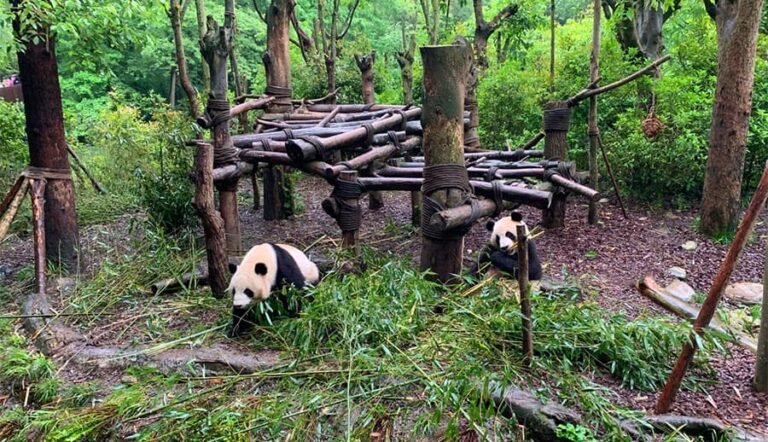
So if you visit the Panda Base in the summer, you might see the following scene: When the park opens at 7:30 a.m., the pandas are still outside eating bamboo. By around 9:30 a.m., as the temperature rises, staff begin guiding the pandas back indoors. After 10:00 a.m., the outdoor exhibit area is essentially empty.
It’s not that you can’t visit in the summer, but you’ll need to get there early. The hour and a half between 7:30 and 9:00 is your only chance to see active pandas outdoors.
Fall (September–November): The Best Overall Time
Autumn is my personal top recommendation.
Starting in September, temperatures in Chengdu gradually drop from the summer high of 30°C to around 20°C in October, and further to about 15°C in November. The pandas become active again. They’ll eat bamboo outdoors, climb trees, and chase each other.
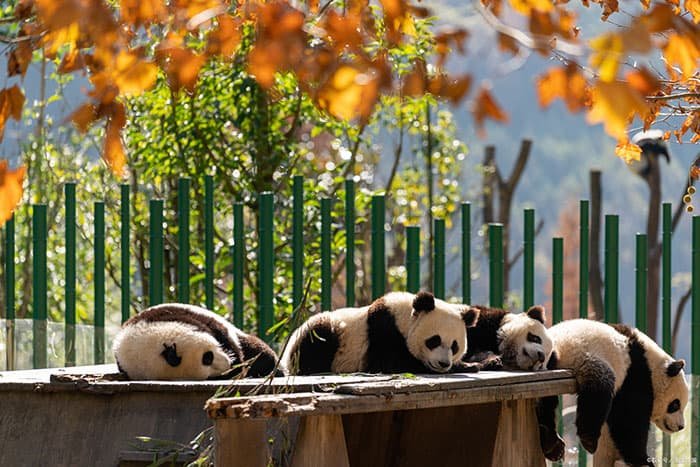
Another advantage of autumn is the period after the National Day holiday and before winter. From mid-October through November, visitor numbers drop significantly, so you won’t have to jostle through crowds. The lighting is also excellent, resulting in photos of pandas with crisp, clean colors.
Winter (December–February): Off-Season but Full of Surprises
Chengdu’s winters are damp and cold, with average temperatures ranging from 3°C to 10°C. Without heating, it may feel colder than the actual temperature. But pandas aren’t bothered by the cold. With their thick, oily fur and underdeveloped sweat glands, they can roam in the snow at temperatures ranging from –10°C to 20°C. So if you visit in winter, you’ll actually have a better chance of seeing the pandas being quite active outdoors.
The biggest perk of winter is the smaller crowds. Except for the Spring Festival holiday, visitor numbers at the reserve on weekdays from December through February are significantly lower than in spring and fall. You can stand quietly by the railing and watch a panda eat bamboo for ten minutes without anyone jostling you. The downside is the short daylight hours; the park begins closing around 4:30 p.m. If you visit in winter, you must schedule your tour for the morning.
Morning vs. Afternoon: Timing Is More Important Than Season
Many people spend a lot of time agonizing over “which month to visit,” yet overlook a more important question: What time will you arrive?
Morning: The Golden Window
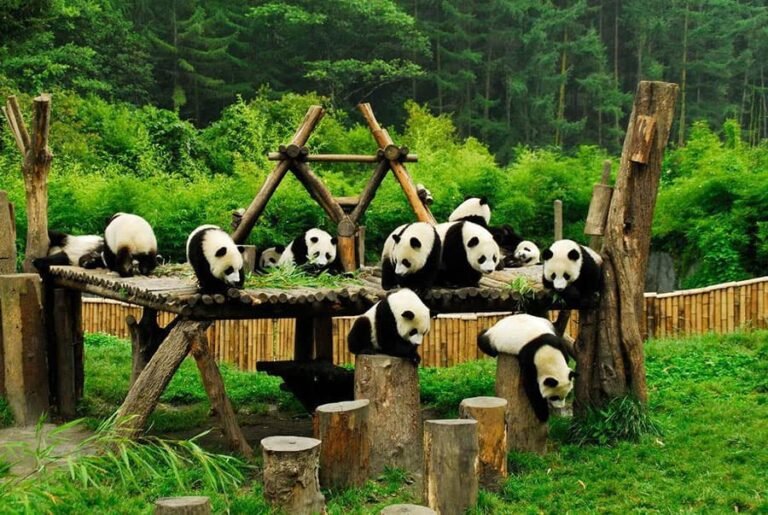
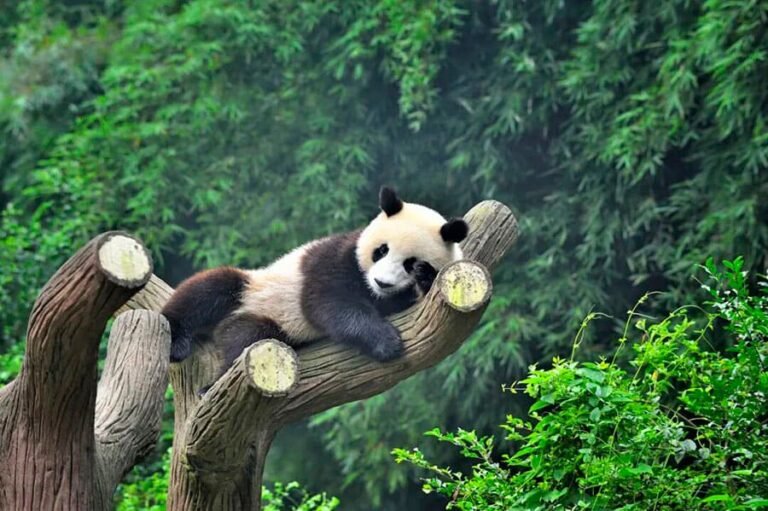
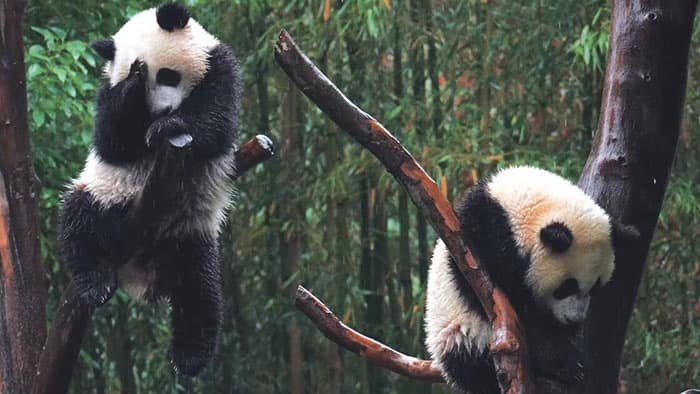
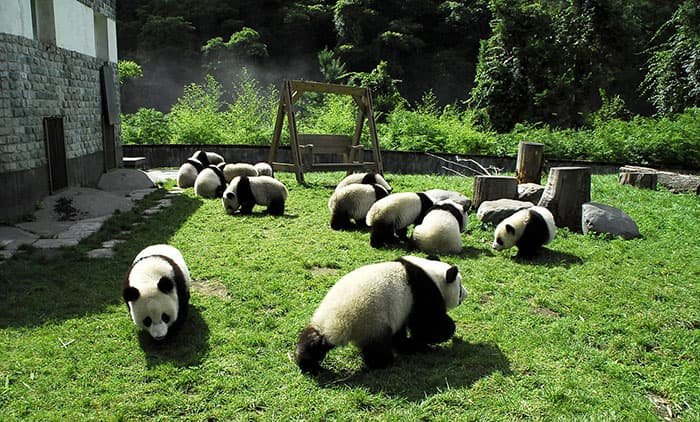
Giant pandas are “dawn-and-dusk active” animals. Early morning and late afternoon are when they’re most active. At the Chengdu Panda Base, this window is precisely limited to between 7:30 a.m. and 10:00 a.m. When the park opens at 7:30 a.m., the pandas are already outside waiting for breakfast. You’ll see them sitting and munching on bamboo, climbing trees, and rolling around on the grass. Young pandas are especially active, wrestling and chasing each other.
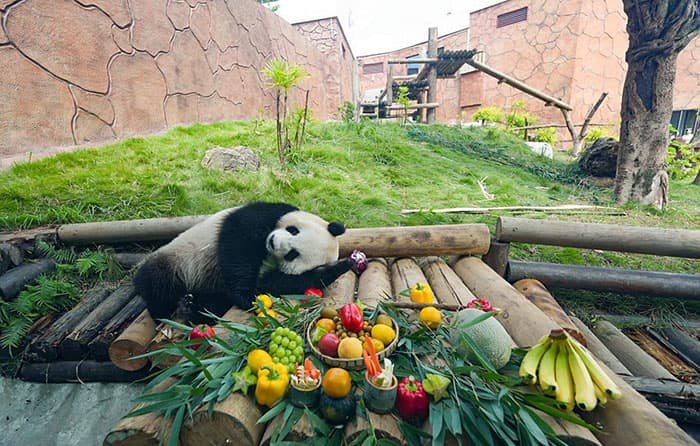
Here’s a fact you might have overlooked: You don’t need to rush in the moment the park opens. If you arrive at the South Gate at 7:30, there might already be hundreds of people lined up ahead of you. By the time you actually reach the Panda Villa, it will already be past 8:00. A more efficient approach is to book your morning tickets online in advance and arrive at the exhibit area before 8:00 a.m., rather than wasting time waiting in line at the entrance.
Afternoon: The Underrated Second-Best Time Slot
Most travel guides will tell you, “Don’t go in the afternoon—the pandas are all sleeping.” This is generally true, but not entirely.
Pandas have a brief period of activity between 2:00 p.m. and 3:30 p.m. After their afternoon nap, they may get up to eat some bamboo or move to a different spot to continue sleeping. There are far fewer visitors during this time, so if you’re not looking to see the pandas “running and jumping” and just want to observe them quietly, the afternoon is actually a good option. However, if you’re making a special trip to see the cubs or Hua Hua, don’t count on the afternoon. You’ll most likely only see them sleeping.
Weather and Temperature: 26°C—The Line That Determines Everything
26°C is an invisible dividing line at the Chengdu Panda Base.
When the temperature is below 26°C, pandas are willing to spend time outdoors. When it exceeds 26°C, they will voluntarily return to the air-conditioned indoor areas. This isn’t a rule set by humans—it’s the pandas’ own choice.
This means a few things:
First, cloudy days are better than sunny ones. On a sunny afternoon, the outdoor temperature can easily exceed 26°C. But on a slightly cool, overcast day, when temperatures range between 20°C and 24°C, the pandas will stay outside longer.
Second, rainy days aren’t necessarily bad news. If it’s a light, drizzling rain, the temperature usually doesn’t get too high. Pandas are equipped with “waterproof fur coats,” so a light rain is no big deal for them. Watching pandas eat bamboo under an umbrella in the rain might be more interesting than watching them hide in an air-conditioned room under the scorching sun.
Third, you must check the temperature forecast during the summer. If the forecast calls for a high of 30°C or higher, you’ll only have a little over an hour after the park opens. If the forecast calls for cloudy weather around 25°C, you might have the entire morning.
|
Temperature Range |
Panda Behavior |
Your Strategy |
|---|---|---|
|
Below 20°C |
Active outdoors, eating bamboo and climbing trees |
For a typical visit, there are opportunities throughout the day |
|
20°C–25°C |
Outdoor activities, but there may be a lunch break |
Mornings are best; in the afternoon, it’s a matter of luck |
|
25°C–26°C |
Start cutting back on outdoor activities |
Get an early start—finish reviewing the key points before 10:00 a.m. |
|
Higher than 26°C |
Back inside the air-conditioned room |
Only during the 1–1.5-hour window after the park opens |
Visitor Flow Patterns: When to Go for the Fewest People
The Chengdu Panda Base limits daily visitor numbers to 85,000—45,000 in the morning and 40,000 in the afternoon. Admission is suspended when the instantaneous visitor count reaches 36,000. This means that even if you manage to secure a ticket, you might still have to wait a long time at the entrance.
Order of visitor numbers from lowest to highest:
- Winter weekdays (December–February, excluding the Spring Festival) — Least crowded
- Fall weekdays (excluding holidays) (mid-October–November) — Very few visitors
- Spring weekdays (excluding holidays) (March–April) — Few to moderate crowds
- Summer weekdays (June–August) — Moderate crowds, but the heat can be an issue
- Weekends (year-round) — Crowded
- Chinese national holidays — Extremely crowded
Dates to Avoid:
- Chinese New Year holiday (dates vary annually, usually in late January or February)
- May Day holiday (May 1–5)
- National Day holiday (October 1–7)
- Summer vacation (July–August; high volume of family visitors)
If you must visit during a holiday, the only effective strategy is: book tickets 14 days in advance, arrive at the entrance 30 minutes before the park opens, and head straight for the panda you most want to see.
Panda Behavior and Photography Tips
What Pandas Do Throughout the Day
|
Time Period |
Panda Status |
The Value of Photography |
|---|---|---|
|
7:30–9:00 |
Eating breakfast keeps you most active |
The best—lots of action and expressive facial expressions |
|
9:00–10:00 |
Keep eating, or start dozing off |
High; there’s still a chance to capture it in motion |
|
10:00 a.m.–2:00 p.m. |
Focus on sleeping |
Low—mainly due to sleeping position |
|
2:00–3:30 p.m. |
Possible brief activityIn it, take a chance |
In it, take a chance |
|
3:30 p.m.–Clean up the grounds |
Keep sleeping or move slowly |
Low |
Lighting Tips for Photography
From 7:30 to 9:00 a.m., the angle of the light is low and relatively soft, resulting in photos with rich tonal layers in the pandas’ fur. Once the sun rises higher, the light becomes harsher, and the pandas’ black-and-white fur is prone to overexposure or underexposure.

If you’re using a smartphone, tap the panda’s face on the screen when shooting against the light to let the phone automatically adjust the exposure. Since pandas are black and white, the camera’s automatic metering is often fooled by their white fur.
Travel Considerations for Different Groups
Families with Children
What children want to see most are the cubs and active young pandas. This means you’ll need to get there early. We recommend leaving your hotel at 7:00 a.m. and arriving at the entrance before 7:30 a.m. Start by visiting the Young Panda Villa, then move on to the Sun Nursery or Moon Nursery.

If your child is very young (under 3 years old), visiting in the afternoon might be easier. There are fewer people, no lines, and children can sleep in their strollers. However, the trade-off is that you won’t see the pandas being active.
Families with Elderly Members
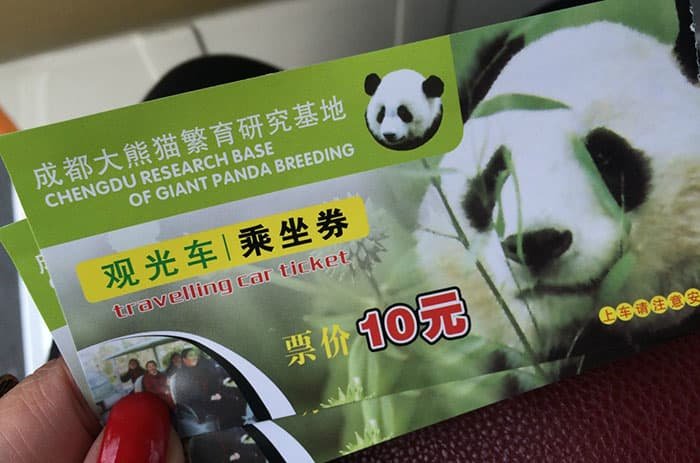
Elderly visitors have limited stamina, so waiting in line and walking are the main challenges. Entering through the West Gate allows you to avoid the long lines at the South Gate. The West Gate is part of the new area expanded in 2022; it has fewer people, smooth paths, and features elevators and ramps. Once inside, you can take the sightseeing shuttle to the old area to see the main attractions.
Photography Enthusiasts
If you want to capture photos of pandas active outdoors, overcast autumn mornings offer the ideal conditions. The light is soft, the pandas are active, and there are fewer visitors.
If you want to photograph cubs, late August through October is your only window of opportunity. Cubs begin to be displayed in the nursery during this period.
Recommendations Summarized by Visitor Type
|
Types of Visitors |
Best Time to Visit |
Recommended Time Slots |
Recommended Entry Points |
Important Reminder |
|---|---|---|---|---|
|
My First Time in Chengdu |
March–May or September–November |
7:30–10:00 |
South Gate |
Book tickets 14 days in advance |
|
Families with children |
Spring and Fall |
7:30–10:00 |
South Gate |
Let’s start by looking at the nursery and the birthing room |
|
Taking care of the elderly |
Spring and Fall |
8:00–10:30 |
West Gate |
Take the sightseeing bus to cut down on walking |
|
Photography Enthusiasts |
Overcast Days in Fall |
7:30–9:00 |
South Gate |
Soft Light, Active Panda |
|
I want to see “Hua Hua” |
Any season |
I’ll be there as soon as the park opens |
South Gate |
Huahua’s Villa Is Closed on Monday |
|
I want to see the newborn cubs |
Late August–October |
Before 9:00 |
South Gate |
There will be a breastfeeding demonstration in the delivery room this morning |
|
Time is tight (half a day) |
Any season |
7:30–10:30 |
South Gate |
Head straight to the core area—no detours |
|
I want to avoid the crowds |
Winter Workdays |
8:00–10:30 |
West Gate |
There aren’t many people, but there aren’t many panda activities either |
Frequently Asked Questions
Q: Do the pandas come out on rainy days?
It depends on the intensity of the rain and the temperature. If it’s a light drizzle and the temperature is below 26°C, the pandas are usually outside. If it’s heavy rain or a downpour, the staff will bring the pandas back indoors. The rule of thumb is simple: check the day’s high temperature. On days with light rain and a high below 25°C, the pandas will most likely be outside.
Q: Will I not be able to see any pandas at all if I visit in the summer?
No. You can still see pandas in the summer, but the experience is different. When the park opens at 7:30 a.m., the pandas are outside. Around 9:30 to 10:00 a.m., once the temperature rises, they return indoors. You can watch them eat bamboo and enjoy the air conditioning through the glass in the indoor exhibition hall. The viewing experience in the indoor exhibit is actually quite good; it’s just that the lighting is a bit dim, so photos don’t turn out as well as they do outdoors.
Q: In which months can you see newborn panda cubs?
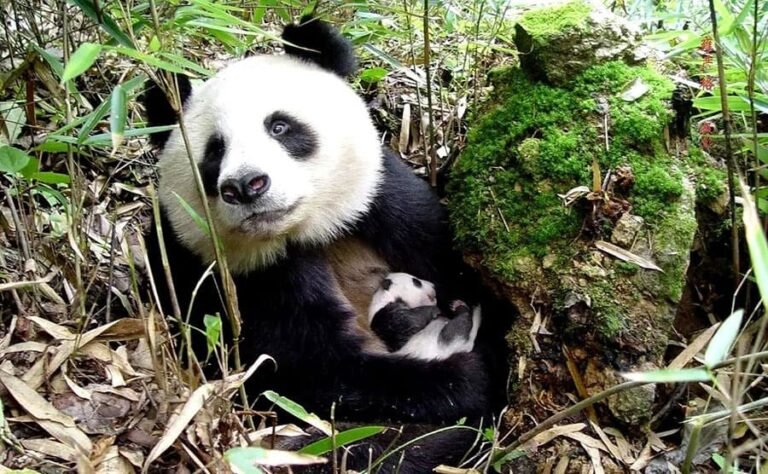
Cubs at the Chengdu Panda Base are generally born between June and August. They aren’t displayed in the maternity ward until a few months after birth. The best time to see them is from late August through October. During this period, you can see the pink, fluffy cubs in the nursery, and sometimes you might even catch a feeding demonstration.
Q: Is it true that you won’t see anything if you go in the afternoon?
It’s not that you won’t see anything, but you’ll need to adjust your expectations. Between 2:00 p.m. and 3:30 p.m., the pandas may be active for a short while. The rest of the time, they’re mostly sleeping. If you just want to “catch a glimpse of the pandas,” the afternoon is fine. If you want to see them running, jumping, and playing, you’ll be disappointed in the afternoon.
Q: How far in advance should I book tickets?
Through official channels, you can book up to 14 days in advance. Morning tickets for peak seasons (May, October, summer vacation, and Chinese New Year) sell out within a few days of becoming available. If your itinerary is set, we recommend booking at least 7 days in advance. If you book just 1 to 2 days ahead, only afternoon tickets may be left.
Let Panda Chengdu Tours Help You Plan the Best Time to Visit
After reading this article, you probably already have a general idea: spring and fall are best, mornings are best, and it’s best to avoid holidays.
But in practice, you’ll run into these specific questions:
- The week you plan to visit Chengdu happens to be right around the National Day holiday—how crowded will it be?
- You only have half a day—how should you plan your route from your hotel to finish touring the core area by 10:00 a.m.?
- You want to see the cubs, but you’re not sure if any will be on display in the nursery at that time.
- You want to enter through the West Gate, but you don’t know how to take the shuttle bus.
Panda Chengdu Tours specializes in inbound tourism services for Chengdu and Sichuan. We interact with the Panda Base daily, so we know which exhibition areas are most worth visiting at specific times, how to help you avoid the lines at the South Gate, and whether the day’s temperature will affect the pandas’ outdoor activities.
Here’s how we can help:
- Ticket Reservations — We’ll secure morning tickets for you so you won’t arrive at the gate only to find they’re sold out.
- Itinerary Planning — Based on your travel dates and the weather, we’ll advise you on what time to arrive, which gate to use, and what to see first.
- Transportation Arrangements — Private transportation from your hotel to the reserve, so you won’t have to squeeze onto the subway or wait for the bus.
- English-Speaking Guide — A guide who understands panda behavior and knows exactly when and where to find the most active pandas.
- Combined Itineraries — We’ll link the Panda Base with other Sichuan attractions like Dujiangyan, Mount Qingcheng, and Leshan.
Want to know the best times to visit the Panda Base during your stay? Contact Panda Chengdu Tours, tell us your dates, and we’ll help you figure it out.