Chengdu Panda Base vs Panda Valley: Which to Visit?
Quick Comparison Chart
|
Comparison Items |
Chengdu Panda Base |
Panda Valley (located in Dujiangyan) |
|---|---|---|
|
Location |
Chenghua District, Chengdu, about 10 kilometers from the city center |
Dujiangyan, located about 50 kilometers from downtown Chengdu |
|
Giant Panda Population |
260 or more |
About 10 to 12 |
|
Red Pandas |
Yes, a new red panda ecological enclosure opened in February 2026, housing approximately 22 red pandas. |
Yes, a semi-wild red panda forest with about 20 red pandas |
|
Park Area |
Approximately 3,570 mu |
Approximately 2,004 mu |
|
Admission |
¥55 |
¥55 |
|
Summer Hours |
March 16–October 31, 7:30 a.m.–6:00 p.m. |
May 1–October 31, 7:30 a.m.–6:00 p.m. |
|
Winter Hours |
November 1–March 15, 8:00 a.m.–5:30 p.m. |
November 1–April 30, 8:00 a.m.–5:30 p.m. |
|
Recommended Visit Duration |
3 to 4 hours, half a day |
1.5 to 3 hours |
|
How Crowded Is It |
A lot—the daily visitor limit is 85,000 people. |
Low to moderate |
|
Who Is It For |
First-time panda viewers, families, and those who want to see the cubs |
People who want to watch pandas in peace, enjoy natural surroundings, or want to see red pandas |
First, let me clarify something: the Chengdu Panda Base and Panda Valley are not competitors.
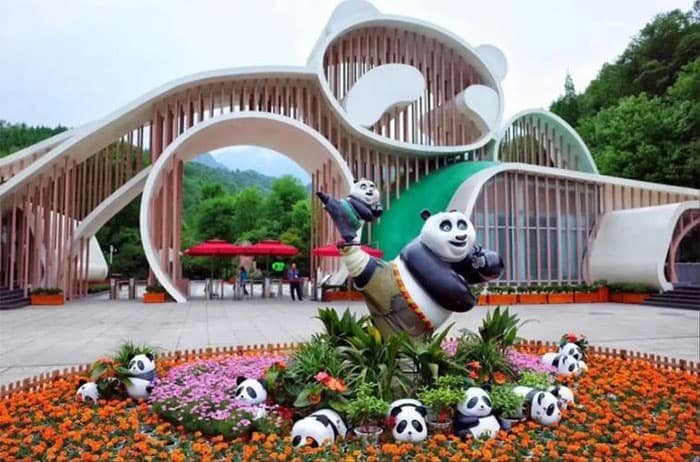
Panda Valley’s official name is the “Chengdu Research Base of Giant Panda Breeding—Dujiangyan Reintroduction Research Center.” It is a key facility for field research and reintroduction training within the Chengdu Panda Base system. In other words, Panda Valley is part of the Chengdu Panda Base; it is not a separate, independent park. It only opened to the public in 2015. Its primary mission isn’t exhibition, but to train captive giant pandas to adapt to life in the wild gradually.
So the real question isn’t “which one is better.” The question is: Which one is a better fit for your trip?
The Chengdu Panda Base is larger, has more pandas, and is more accessible. Panda Valley is smaller, quieter, and has fewer giant pandas, but its environment more closely resembles the wild, and the red panda experience is unique.
If you have time, visit both. If you’re only going to one, keep reading.
Location and Transportation
Chengdu Panda Base
The Chengdu Panda Base is located in Chenghua District, about 10 kilometers from Tianfu Square. Getting there is easy.
- Subway: Take Line 3 to Panda Avenue Station. After exiting the station, transfer to the scenic area shuttle bus to the main gate.
- Taxi or ride-hailing service: The trip from the city center takes about 30 to 40 minutes and costs approximately 40 to 60 yuan.
This location is very convenient. If you leave your hotel at 7:00 a.m., you can be at the gate by 7:30 a.m.
Panda Valley (located in Dujiangyan)
Panda Valley is in Yutang Town, Dujiangyan City, about 50 kilometers from downtown Chengdu. The travel time is longer.
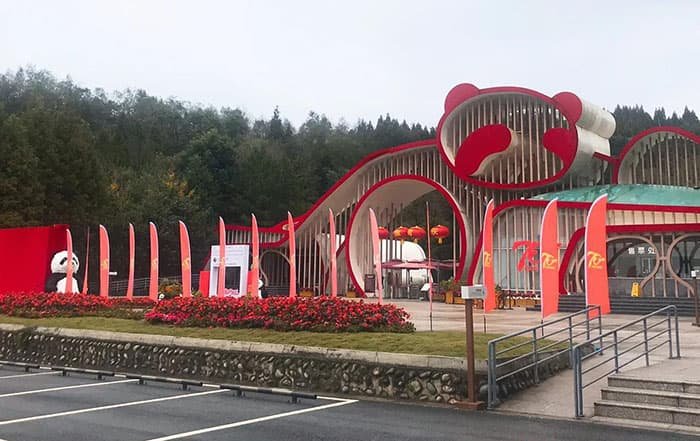
- Intercity high-speed rail: Take the train from Xipu Station to Lidui Park Station—about 30 minutes, fare 10 yuan. After exiting the station, take a taxi for 10 to 15 minutes to Panda Valley.
- By car or taxi: About 1 to 1.5 hours, depending on traffic conditions.
The distance is significant. If you’re taking public transportation, plan on a 1.5-hour one-way trip.
A practical tip: Many people combine a visit to Panda Valley with the Dujiangyan Irrigation System or Mount Qingcheng on the same day. They’re not far apart, so it makes more sense to visit them all in one trip.
Purpose and Mission: They Serve Different Roles
Both the Chengdu Panda Base and Panda Valley let you see pandas, but their reasons for existence differ.
The Chengdu Panda Base is one of the world’s leading institutions for ex situ conservation, scientific research, and breeding of giant pandas. Over the past 30-plus years, it has solved many challenges: how to help giant pandas give birth, how to ensure twins survive, and how to prevent diseases. Most captive giant panda cubs are born and raised here. It’s also home to the largest concentration of pandas—over 260—ranging from newborn cubs to elderly adults.
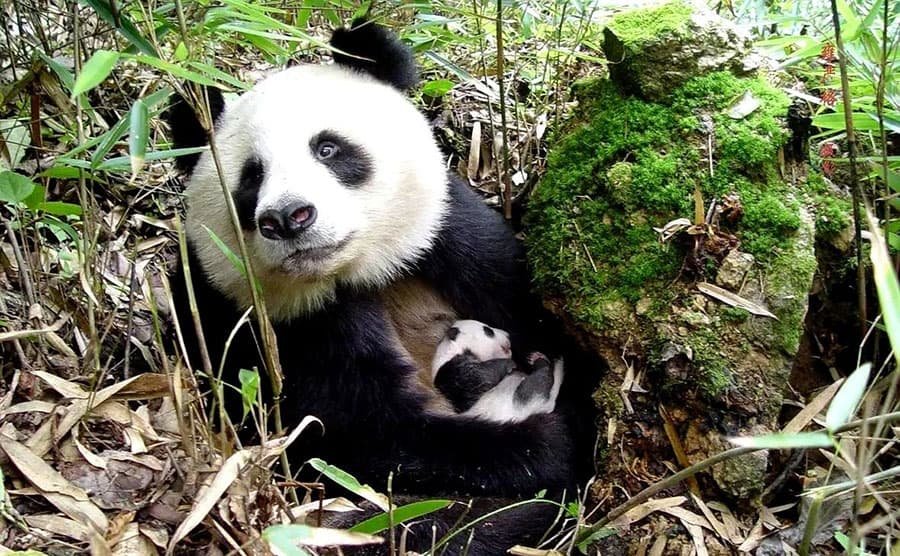
Panda Valley is a reintroduction training center. Its core mission is to prepare captive giant pandas for a return to the wild. Since opening, Panda Valley has conducted reintroduction training for four groups totaling eight giant pandas. The pandas here live in larger enclosures designed to mimic their natural habitat. Unlike a traditional zoo, it functions more as a “transition station” between captivity and the wild.
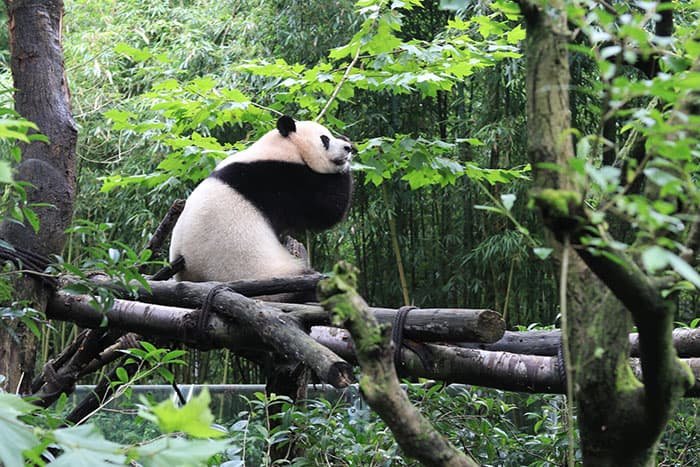
So when you visit Panda Valley, you’re not just seeing pandas—you’re witnessing the front lines of China’s giant panda reintroduction program. It’s a unique experience.
Authentic Panda-Viewing Experiences and Photography Tips
Chengdu Panda Base
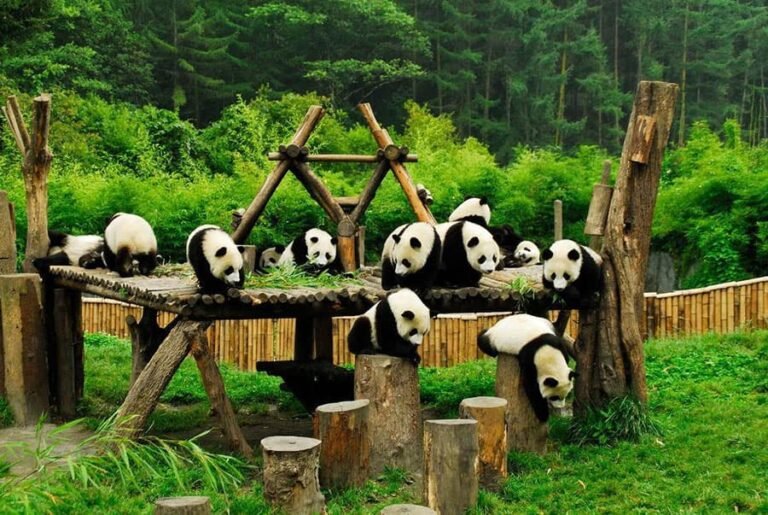
What the Chengdu Panda Base offers is quantity. You can see pandas at every stage of their lives:
- Baby pandas in the Sun Nursery and Moon Nursery—pink, tiny, and very fragile.
- Juvenile pandas climbing trees, playing, and rolling around in the activity area.
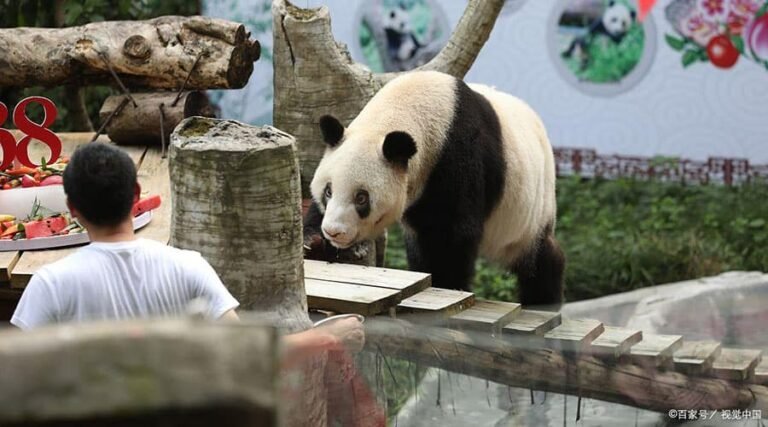
- Adult pandas munching on bamboo, sleeping, and strolling in the villa area.
- Red pandas—about 22 of them—in the 12,000-square-meter ecological free-range area, which opened in February 2026.
But here’s the catch: this experience is quite time-sensitive.
Giant pandas are most active between 7:30 and 10:30 a.m. After 11:00 a.m., as temperatures rise, most pandas start to sleep. If you arrive after 10:00 a.m., you’ll mostly see fluffy backs and sleeping bodies.
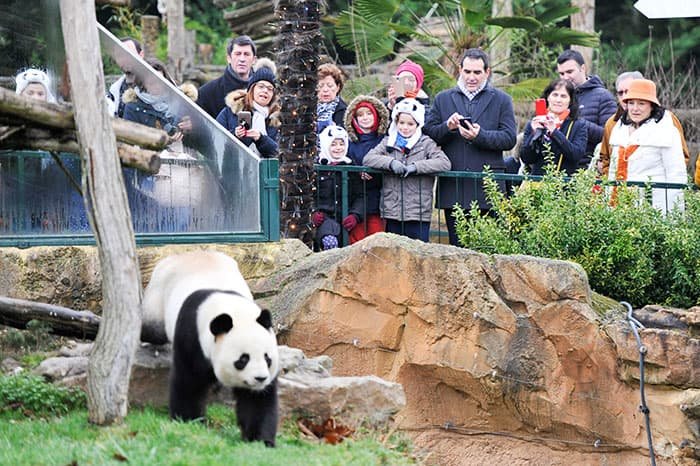
The viewing platform at the Chengdu Panda Base isn’t very large either. Even when it’s not particularly crowded, it’s not easy to find a clear vantage point. One visitor described it this way: “You have to stand on tiptoes, hold your phone above your head, and search for pandas through the gaps in the crowd.” During peak season, this is no exaggeration.

Many people assume that “the longer you stay, the more you’ll see.” In reality, a focused three-hour morning visit offers a far better experience than aimlessly wandering around for five hours in the afternoon. Arrive before 7:30 a.m., visit the maternity ward first, then the villa area. In just two hours, you’ll likely see more active pandas than someone who arrives at noon will see all day.
Panda Valley
Panda Valley offers you a close-up experience.
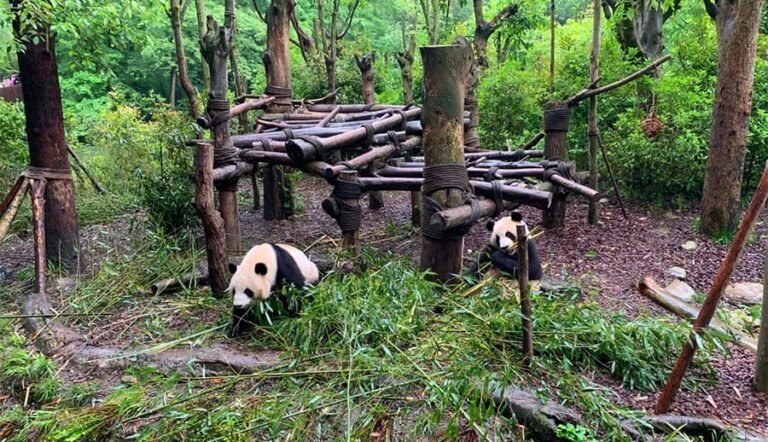
Panda Valley is home to about 10 to 12 giant pandas. Compared to the Chengdu Panda Base, this number may seem small. But the enclosures here are larger, the viewing platforms are more spacious, and there are far fewer visitors. You can stand right by the railing and quietly watch a panda eat bamboo for as long as you like—without anyone pushing you from behind.
Then there are the red pandas
Panda Valley features a semi-wild red panda forest. About 20 red pandas live in this hillside area. They aren’t behind glass. They roam along the wooden boardwalks. Sometimes, they’ll suddenly appear right beside you on the path. One visitor said, “They wander back and forth between the mountains and the park—you never know when one will suddenly pop up right next to you.”
Although the total number of giant pandas at Panda Valley is much smaller than at the Chengdu Panda Base, your chances of seeing active, interactive giant pandas here may actually be higher. Why? The park is smaller, there are fewer visitors, and the bamboo forest environment is closer to the wild. The pandas don’t seem as nervous. They move around more. And you don’t have to fight for a spot with a huge crowd.
To get the full red panda experience at Panda Valley, you’ll need to visit during the morning feeding time—around 9:00 a.m.—and when the weather is cool. On hot afternoons, the red pandas hide high up in the tree canopy and are almost impossible to spot. If you visit Panda Valley in the summer, either go early or skip the red panda forest altogether.
Natural Environment
The Chengdu Panda Base is a well-designed park. The paths are clear, and there’s a panda museum, a science exploration center, a coffee shop, and a gift shop. It’s comfortable and educational. But it’s also bustling. During peak season, it feels a bit like a theme park. The base limits daily visitors to 85,000, and it fills up quickly on holidays.
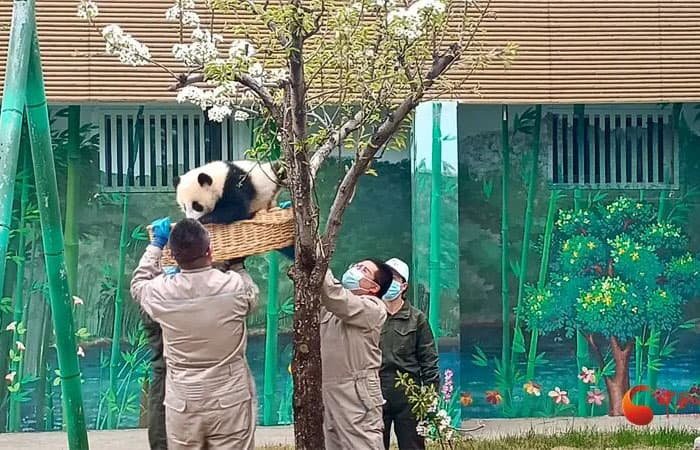
Panda Valley is more like a small retreat in the mountains. It sits at an elevation of approximately 740 to 1,161 meters, surrounded by bamboo forests and mist-shrouded mountains. The park is home to 515 plant species, 21 mammal species, and 131 bird species. In the spring, you might spot azaleas blooming on the hillsides. In the summer, fireflies light up the bamboo groves at night.
The difference in atmosphere isn’t just about the pandas—it’s the overall experience. At the Chengdu Panda Base, you’re in the city; at Panda Valley, you’re in the mountains. Both are great—they just feel different.
How long should you plan to stay?
|
Chengdu Panda Base |
Panda Valley |
|
|---|---|---|
|
Least time |
3 hours |
1.5 hours |
|
A Relaxing Rhythm |
3.5 to 4 hours |
2 to 3 hours |
|
Recommended Strategies |
Arrive at 7:15, leave by 11:00 |
Arrive at 8:00 a.m. and explore Dujiangyan together |
For the Chengdu Panda Base, most travel guides recommend setting aside 3 to 4 hours—half a day. The best time to visit is from 7:30 to 10:30. After that, the pandas go to sleep, crowds reach their peak, and the experience takes a hit. A focused morning visit is more worthwhile than spending the whole day there.
For Panda Valley, 1 to 3 hours is enough for most people. The park is small, and the trails are straightforward—you won’t get lost. But if you want to sit down and watch the pandas for a while, set aside at least two hours.
Families with Children and First-Time Visitors to Chengdu
If this is your first time in Chengdu and you want to see as many pandas as possible in one go: Go to the Chengdu Panda Base. Arrive at 7:15 a.m. Buy tickets online in advance—they aren’t sold at the gate. Start with the nursery, then move on to the villa area. In one morning, you’ll be able to see cubs, juvenile pandas, and adult pandas.
If you’re traveling with young children: Most areas of the Chengdu Panda Base are stroller-friendly. The paths are relatively flat, and there are rest areas and coffee shops. The downside is that it gets crowded, making it difficult to maneuver a stroller through the crowds. If your child can walk on their own, the Chengdu Panda Base is a great choice.
If you’re traveling with elderly family members or someone with limited mobility: the giant panda viewing area at Panda Valley is flatter and much less crowded. However, the Red Panda Forest requires walking uphill. If mobility is an issue, stay near the entrance at the giant panda enclosures. The Chengdu Panda Base has more paved paths, making it more accessible for wheelchairs, but the distances between enclosures are longer.
If you’ve seen pandas before and want a different experience: go to Panda Valley. With its quiet atmosphere, semi-wild red pandas, and mountain scenery, it’s completely different from the Chengdu Panda Base.
Which one should you choose?
Choose the Chengdu Panda Base if:
- This is your first time seeing pandas.
- You want to see panda cubs.
- You don’t have much time in Chengdu.
- You want a trip you can easily complete in half a day.
- You’re traveling with children and want them to see “lots of pandas.”
Choose Panda Valley if:
- You prefer a quiet, natural setting and don’t like overly crowded parks.
- You want to see red pandas up close, without a glass barrier.
- You’re interested in giant panda conservation and reintroduction to the wild.
- You’re already planning to visit Dujiangyan or Mount Qingcheng.
- You prefer a slower pace.
Honestly: Most visitors go to the Chengdu Panda Base and are very satisfied. Panda Valley is better suited for those who value atmosphere over quantity. There’s no wrong answer here. It all depends on what kind of “panda day” you’re looking for.
Can you visit both in one day?
Yes. But it requires some planning.
Option A: Visit the Chengdu Panda Base in the morning and Panda Valley in the afternoon
- 7:15 — Arrive at the Chengdu Panda Base and enter as soon as it opens.
- 7:30–10:30 — Watch the active pandas, starting with the maternity ward, then moving on to the villa area.
- 10:30 — Leave the reserve to avoid the peak crowds.
- 11:00 — Take a taxi or the high-speed rail to Dujiangyan; the trip takes about 1 to 1.5 hours.
- 12:30 — Have lunch in Dujiangyan.
- 1:30–3:30 p.m. — Explore Panda Valley.
- 4:00 PM —If you still have energy, visit the Dujiangyan Irrigation System.
- 5:30 PM —Return to Chengdu.
This is a full-day itinerary. It’s doable, but it’s packed. In the morning, you’ll see active pandas at the Chengdu Panda Base, but by the time you arrive at Panda Valley in the afternoon, the giant pandas might be sleeping. If it’s hot, the red pandas might also be hiding in the trees.
Option B: Split into Two Half-Days
If you have the time, this option is better.
- First morning: Chengdu Panda Base—arrive at 7:15 a.m. and leave before 11:00 a.m.
- Second morning: Panda Valley—arrive at 8:00 a.m. and leave before 11:00 a.m., then visit the Dujiangyan Irrigation System in the afternoon.
This way, you’ll catch the morning “golden window” at both locations. You’ll be able to see active pandas at both sites, and you won’t have to rush from one place to the next.
Reminder: If you try to cram both into one afternoon, you’ll end up exhausted and disappointed. The Chengdu Panda Base is worth a full morning, and so is Panda Valley. If you only have one day, choose one and enjoy it to the fullest.

Frequently Asked Questions
Q: Do I need to book tickets in advance?
Yes. Both the Chengdu Panda Base and Panda Valley require online reservations. Tickets are not sold on-site. You can book through the official WeChat public account or a trusted travel agency. Reservations for the Chengdu Panda Base can be made up to 14 days in advance; morning time slots are very popular. Tickets often sell out during holidays and peak seasons.
Q: Which months of the year are best for a visit?
Fall (October to November) and spring (March to April) are ideal. The weather is cool, the pandas are active, and the crowds are manageable. Summers are hot and crowded. Winters are cold but less crowded; the pandas remain active even when temperatures are low.
Q: How do I get to Panda Valley from Chengdu?
Take the intercity high-speed rail from Xipu Station to Lidui Park Station—it takes about 30 minutes and costs 10 yuan. Then take a taxi for 10 to 15 minutes to Panda Valley. You can also take Metro Line 2 to Xipu Station, transfer to the intercity high-speed rail, and follow the same steps from there. Alternatively, you can book a private car through a travel agency for a more convenient door-to-door service.
Q: Can you see red pandas at both locations?
Yes. The Chengdu Panda Base opened a new 12,000-square-meter red panda ecological enclosure in February 2026. Panda Valley has featured a semi-wild red panda forest since it first opened. The key difference: at Panda Valley, red pandas walk along wooden boardwalks, sometimes coming within just a few meters of visitors. At the Chengdu Panda Base, the red panda area has been renovated and may be more crowded.
Q: If I’ve already been to the Chengdu Panda Base, is Panda Valley still worth a visit?
Yes, it is—especially if you enjoyed the Chengdu Panda Base but found it too crowded. Panda Valley offers a completely different experience: quiet, natural, and more intimate. There are fewer red pandas, but you can get closer to them and observe them for longer. The red panda experience alone makes the trip worthwhile.
Contact Panda Chengdu Tours for a Customized Panda Itinerary
Many tourists don’t realize one crucial thing until it’s too late: the success of a panda tour depends entirely on timing and planning.
Tickets sell out. Morning slots are the first to go. Getting to Dujiangyan involves taking the high-speed rail, hailing a taxi, and carefully calculating your time. If you don’t plan your time right, you might spend the whole day waiting in line or watching pandas sleep.
That’s exactly what Panda Chengdu Tours is here for. We specialize in inbound tourism services for Chengdu and Sichuan. We’re familiar with the rules, routes, and schedules at all major panda reserves and Panda Valley. We know exactly which entrance to use, which path to take first, which enclosures are worth seeing in the morning, and how to combine visits to both locations without wasting time.
We can help you with:
- Ticket Reservations — We’ll secure early-entry tickets for the Chengdu Panda Base and Panda Valley.
- Transportation — Private vehicles and drivers who know the fastest routes, so you won’t have to wait for public transportation.
- English-Speaking Guides — Experts in panda behavior, conservation, and reintroduction programs.
- Customized Itineraries — Whether it’s a half-day, full day, or a week, we’ll tailor the schedule to your availability.
- Combined Itineraries — Efficiently visit both panda destinations in a single day, or combine the pandas with Dujiangyan, Mount Qingcheng, and downtown Chengdu.
We’re not just another run-of-the-mill travel agency. We’re panda tour specialists. We maintain direct contact with the Chengdu Panda Base. We know the rules, schedules, and insider tips. These details determine whether your panda day will be relaxed or rushed.
Ready to see the pandas? Contact Panda Chengdu Tours to start planning. Whether you want to spend half a day at the Chengdu Panda Base, enjoy a quiet morning at Panda Valley, or take a one-day tour combining pandas and Dujiangyan, we can help you arrange it.